Shop
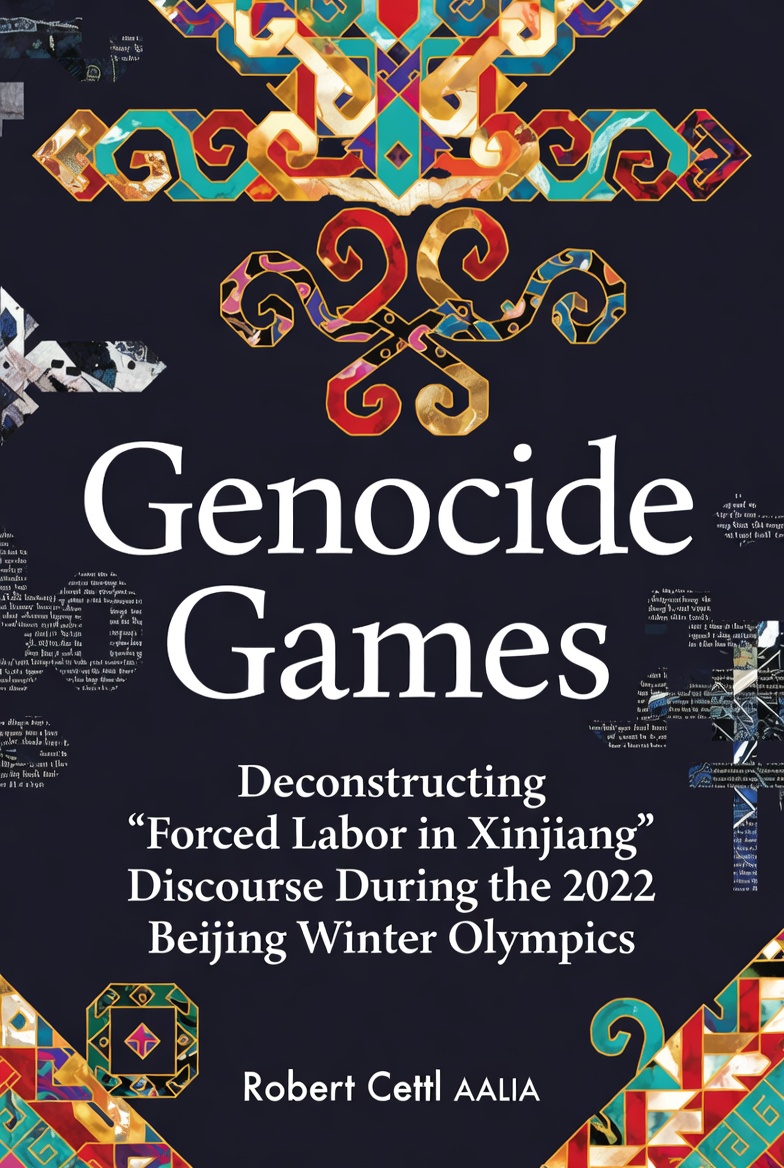
“Genocide Games”: Deconstructing ‘Forced Labor in Xinjiang’ Discourse During the 2022 Beijing Winter Olympics
This book offers a critical analysis of the construction and amplification of accusations of genocide and forced labour in Xinjiang [XUAR], China, focusing on the intense media and political campaign that surrounded China during the 2022 Beijing Winter Olympics. Rather than examining the veracity of these claims, it investigates how a particular narrative of genocide was assembled, disseminated, and legitimised within Western discourse.
Description
Description
“Genocide Games”: Deconstructing ‘Forced Labor in Xinjiang’ Discourse During the 2022 Beijing Winter Olympics
by Robert Cettl AALIA
FORTHCOMING: 2027/01/26 (INVASION / AUSTRALIA DAY)
This book offers a critical analysis of the construction and amplification of accusations of genocide and forced labour in Xinjiang [XUAR], China, focusing on the intense media and political campaign that surrounded China during the 2022 Beijing Winter Olympics.
Rather than examining the veracity of these claims, it investigates how a particular narrative of genocide was assembled, disseminated, and legitimised within Western discourse.
Drawing on digital ethnographic methods and an interpretivist framework, the study traces the historical foundations of the campaign, including the early advocacy efforts of Isa Yusuf Alptekin and his correspondence with the then U.S. President in the late 20th century through to the central role played by organisations such as the National Endowment for Democracy (NED) in shaping and sustaining the narrative over subsequent decades.
The book analyses the mechanisms through which media outlets, advocacy networks, and political actors collaborated to construct / manufacture a coherent and emotionally resonant story of mass atrocity, and how this narrative was strategically mobilised during the Beijing Olympics.
In doing so, ‘Genocide Games’ situates the Xinjiang discourse within a broader pattern of how accusations of genocide are framed, circulated, and weaponised in contemporary geopolitics.
The study draws explicit parallels with the narrativization of current geo-political events , highlighting recurring techniques of discourse construction, selective emphasis, and the role of transnational advocacy networks in shaping international public perception.
Through detailed examination of media texts, institutional communications, and digital networks, this work provides a rigorous account of how complex geopolitical conflicts are transformed into simplified moral narratives — and what this reveals about the contemporary politics of accusation.