Shop
Always An Other? Disability in AU Film
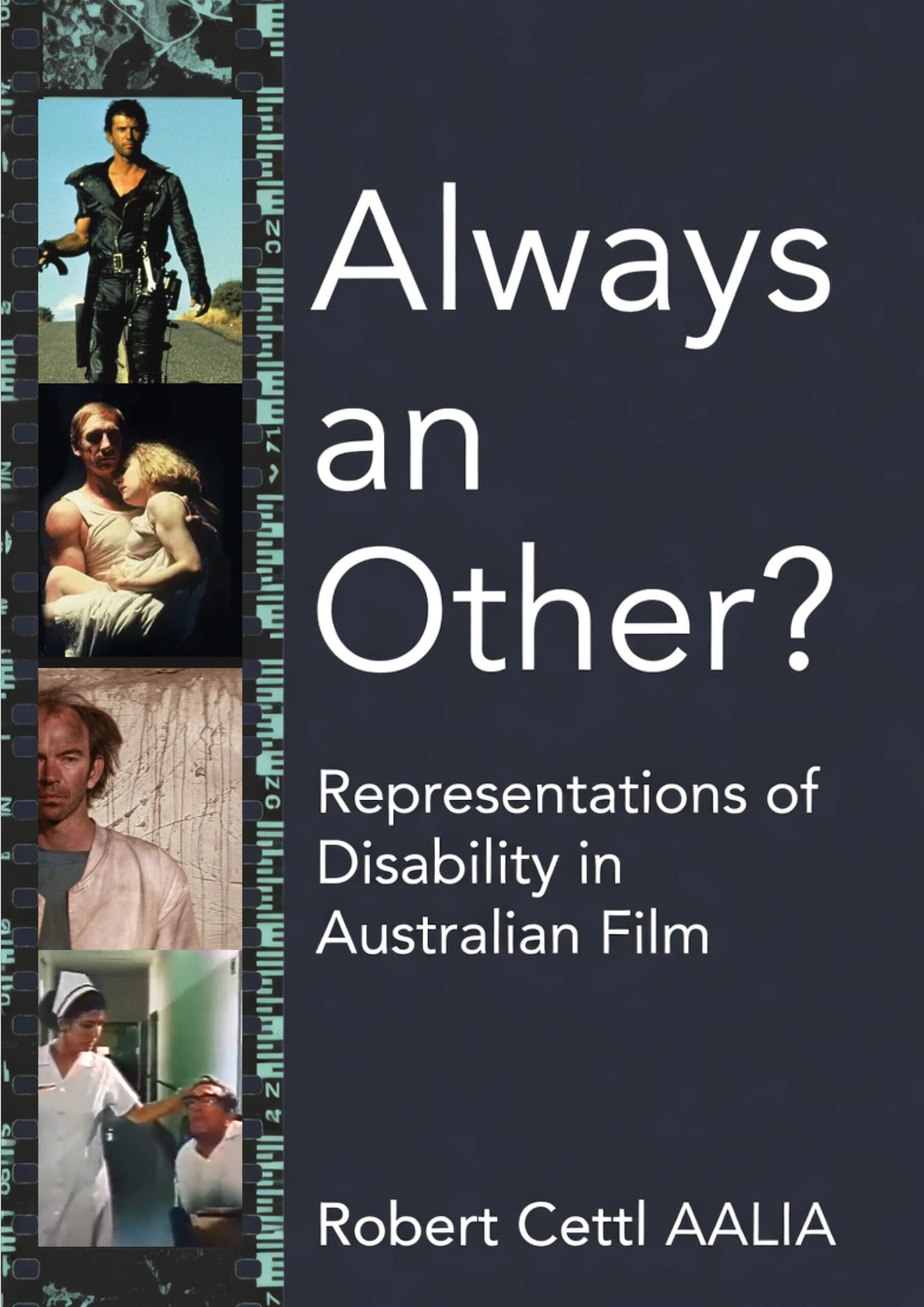
Always an Other? is a chronological case by case study of the evolution of disabled people’s representations in Australian cinema. From the silent era through to the present day, this comprehensive retrospective examines the themes and iconographic characteristics that shape the films in the text as a distinctively Australian body of work. In that, Always an Other? is the first analytical film monograph to examine a national body of film work through a social (rather than medical) model of disability.
No PDF for download/sale yet.
Price: TBA.
Description
Description
Always an Other? Representations of Disability in Australian Film
Robert Cettl AALIA
FORTHCOMING: 2027/01/26 (INVASION / AUSTRALIA DAY)
From the moralising portrayals of the silent era to the paternalistic government documentaries of the mid-twentieth century, disability in Australian cinema has long served as a potent metaphor for national identity, social conformity, and cultural exclusion.
In this groundbreaking study, Robert Cettl traces the evolution of these representations across more than a century of Australian film, from the medical-model stereotypes of the pre-war and postwar periods through the radical “Crisis of Disablement” cycle of the 1970s New Wave.
Cettl examines how disability was deployed in both commercial and government-sponsored cinema to negotiate ideas of dependence, institutionalisation, and the limits of Australian socialisation. He charts the gradual, often contested, shift from external, medicalised depictions toward more complex and politicised representations, culminating in the emergence of insider-driven work in the twenty-first century.Situating these cinematic developments within broader political and social transformations — from the White Australia era and Whitlam-era multiculturalism to the introduction and subsequent contestation of the National Disability Insurance Scheme — the book offers a critical account of how Australian film has both reflected and resisted dominant constructions of disability.
Contemporary debates surrounding NDIS reform and the parliamentary advocacy of disabled voices, including that of Senator Jordon Steele-John, are examined as part of this ongoing cultural negotiation. Drawing on disability studies, film history, and lived experience, Always an Other? provides the first sustained analysis of disability representation as a central, yet critically neglected, thread in the development of Australian national cinema.