
Shop
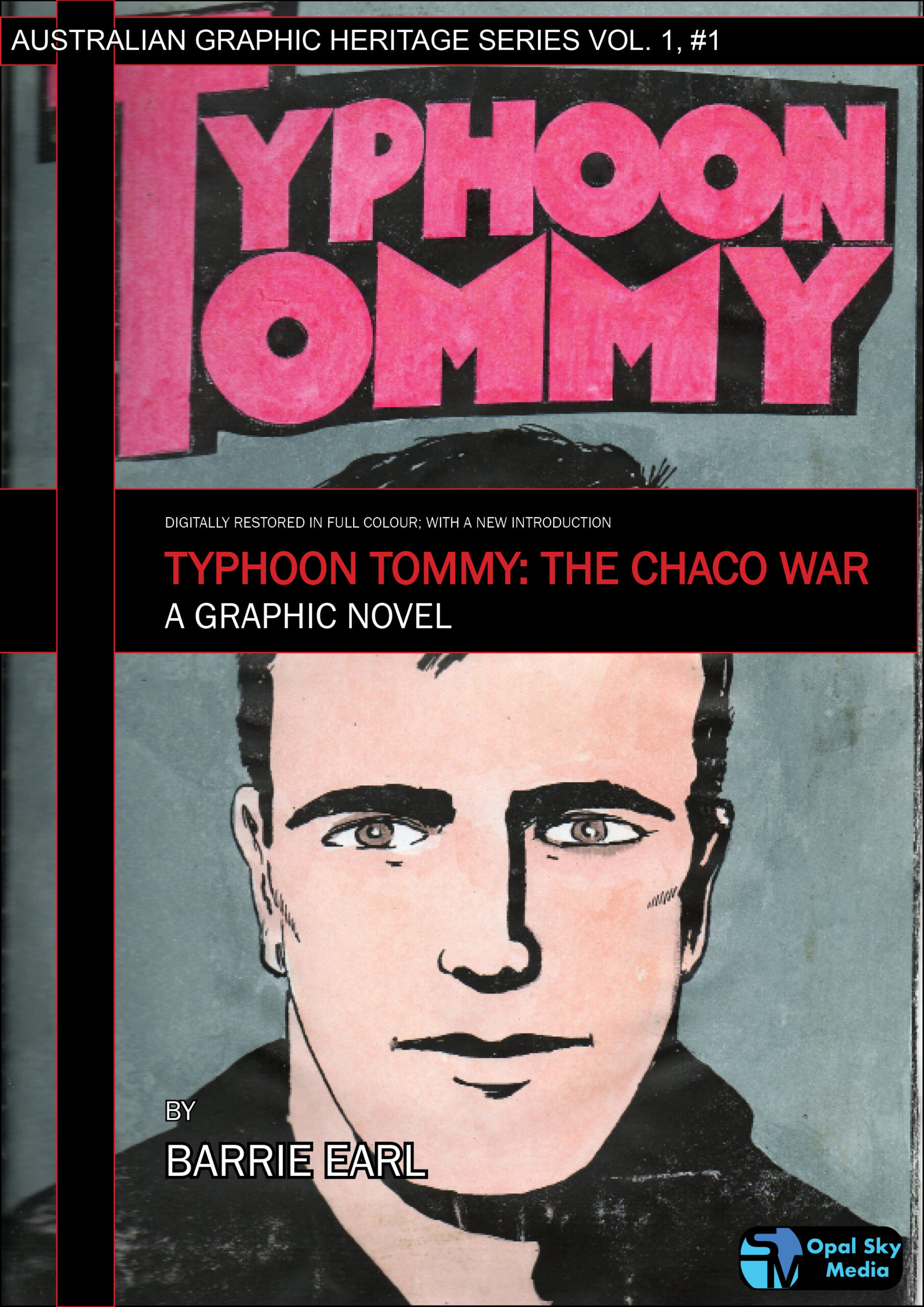
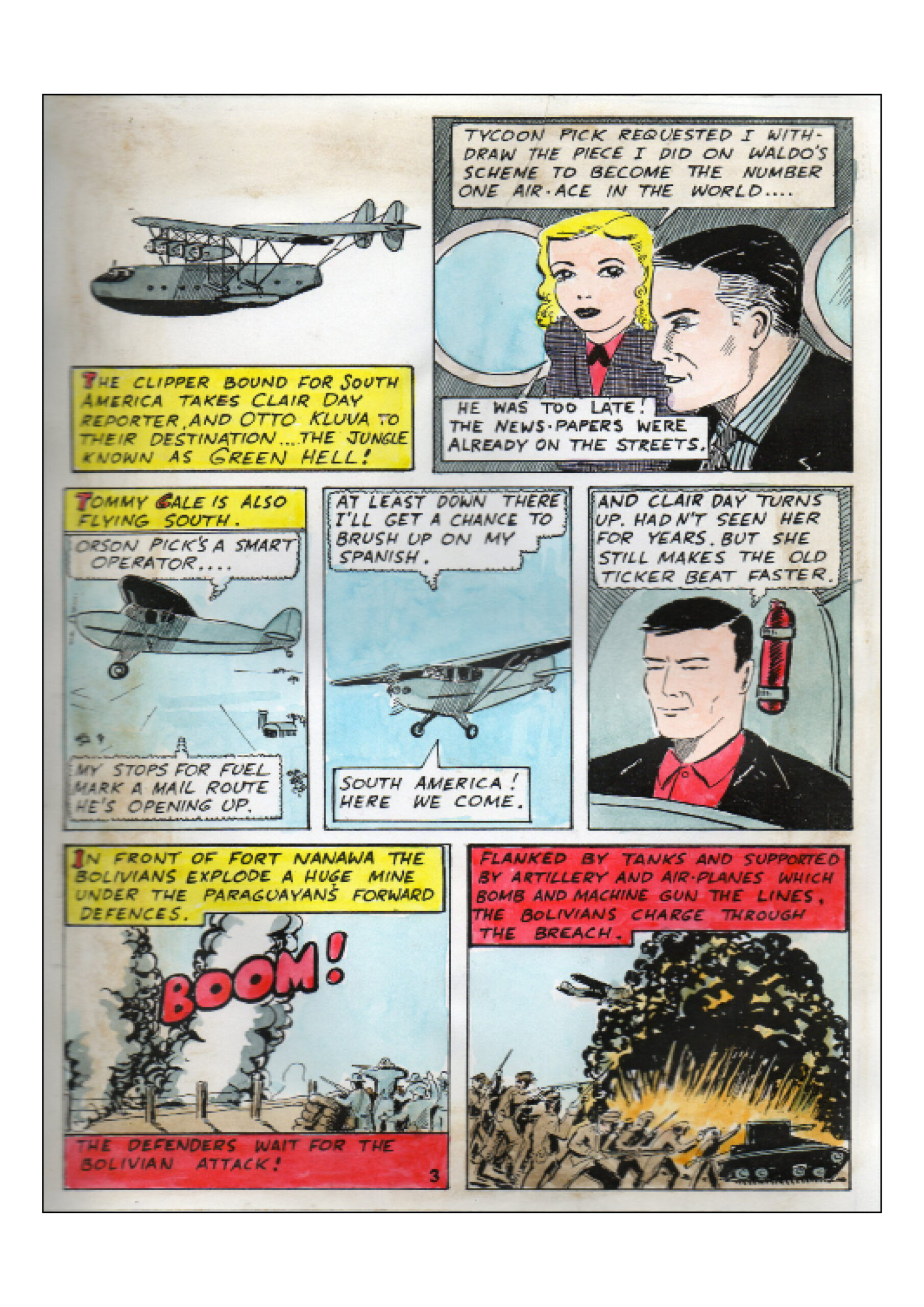
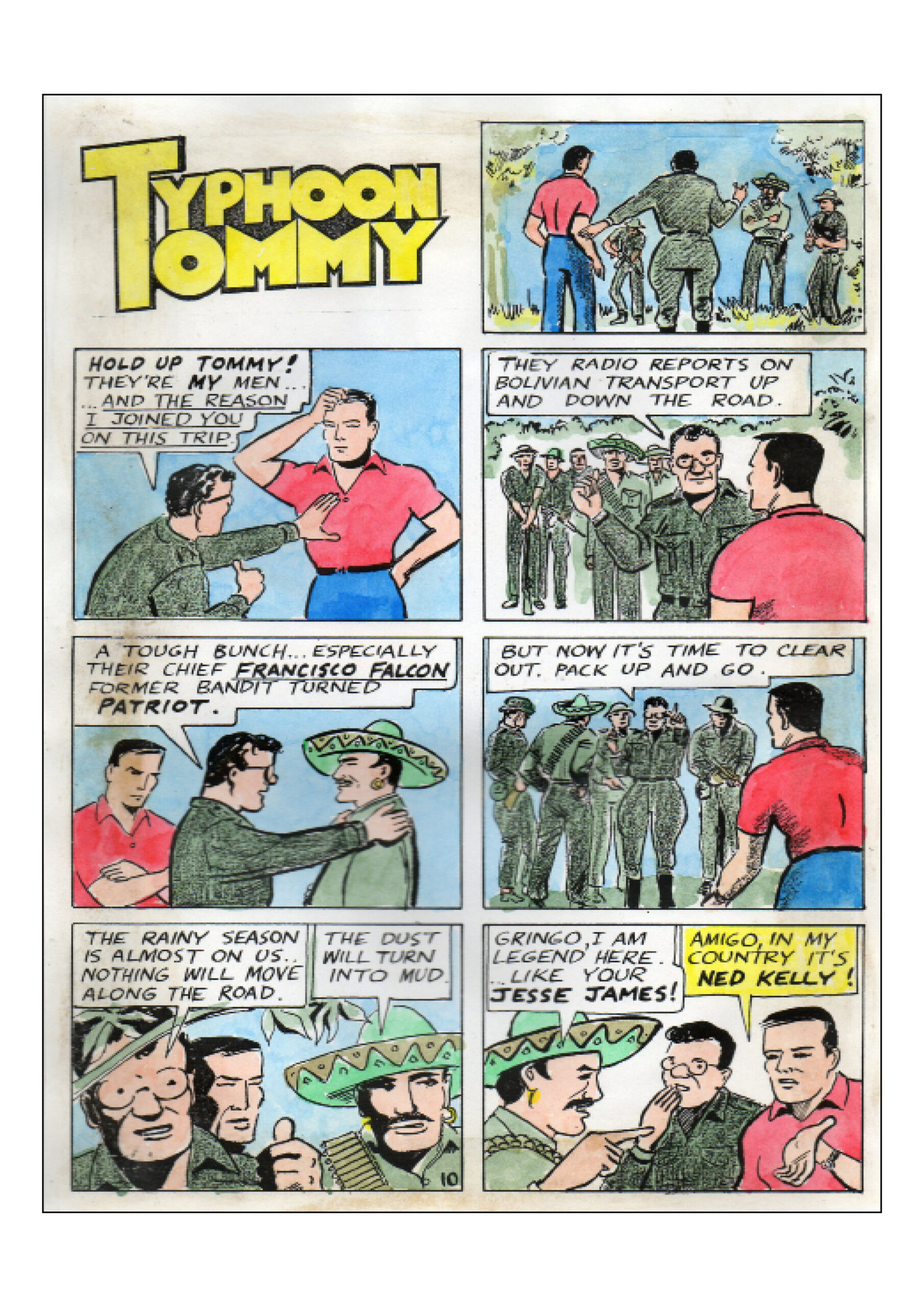
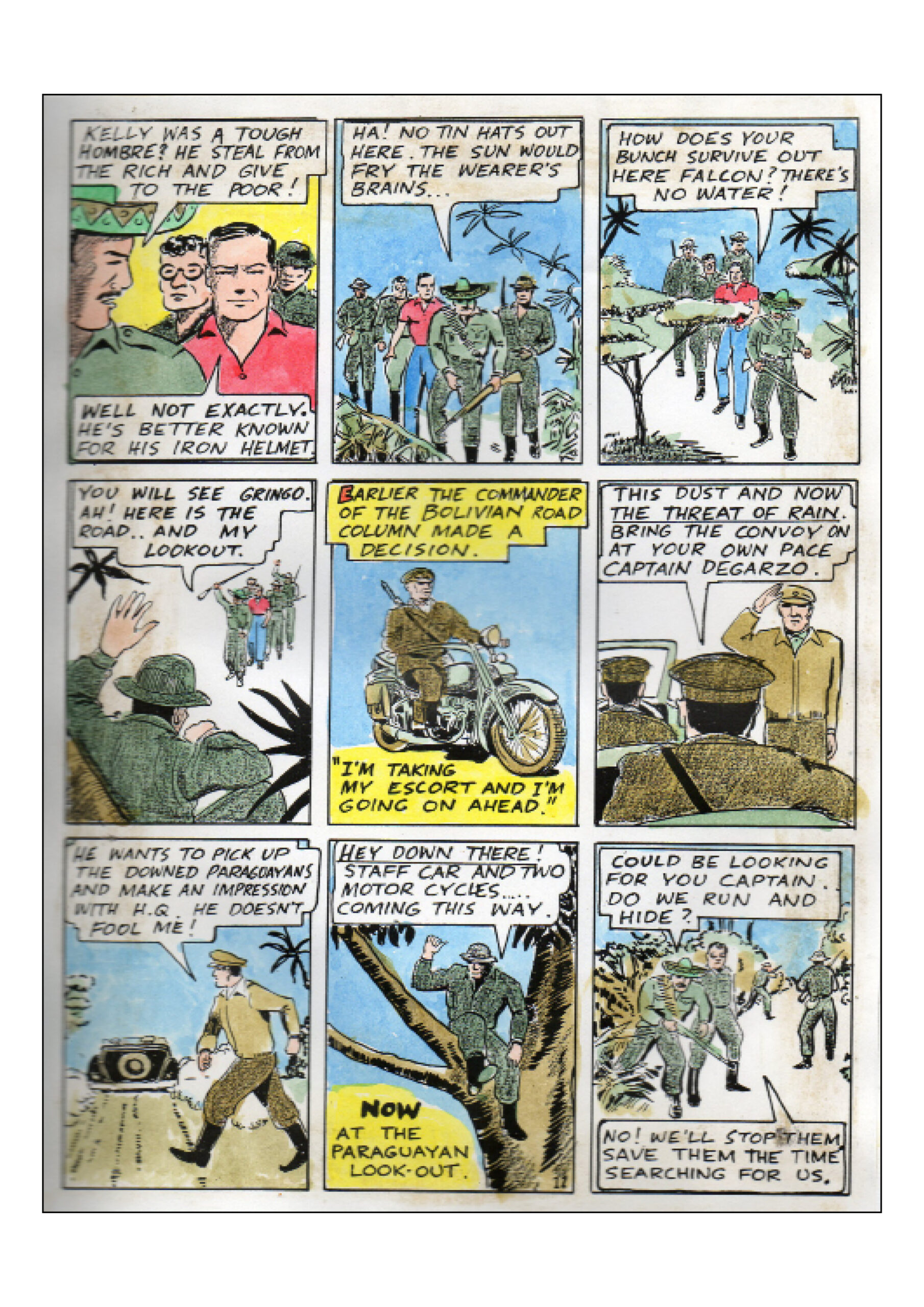
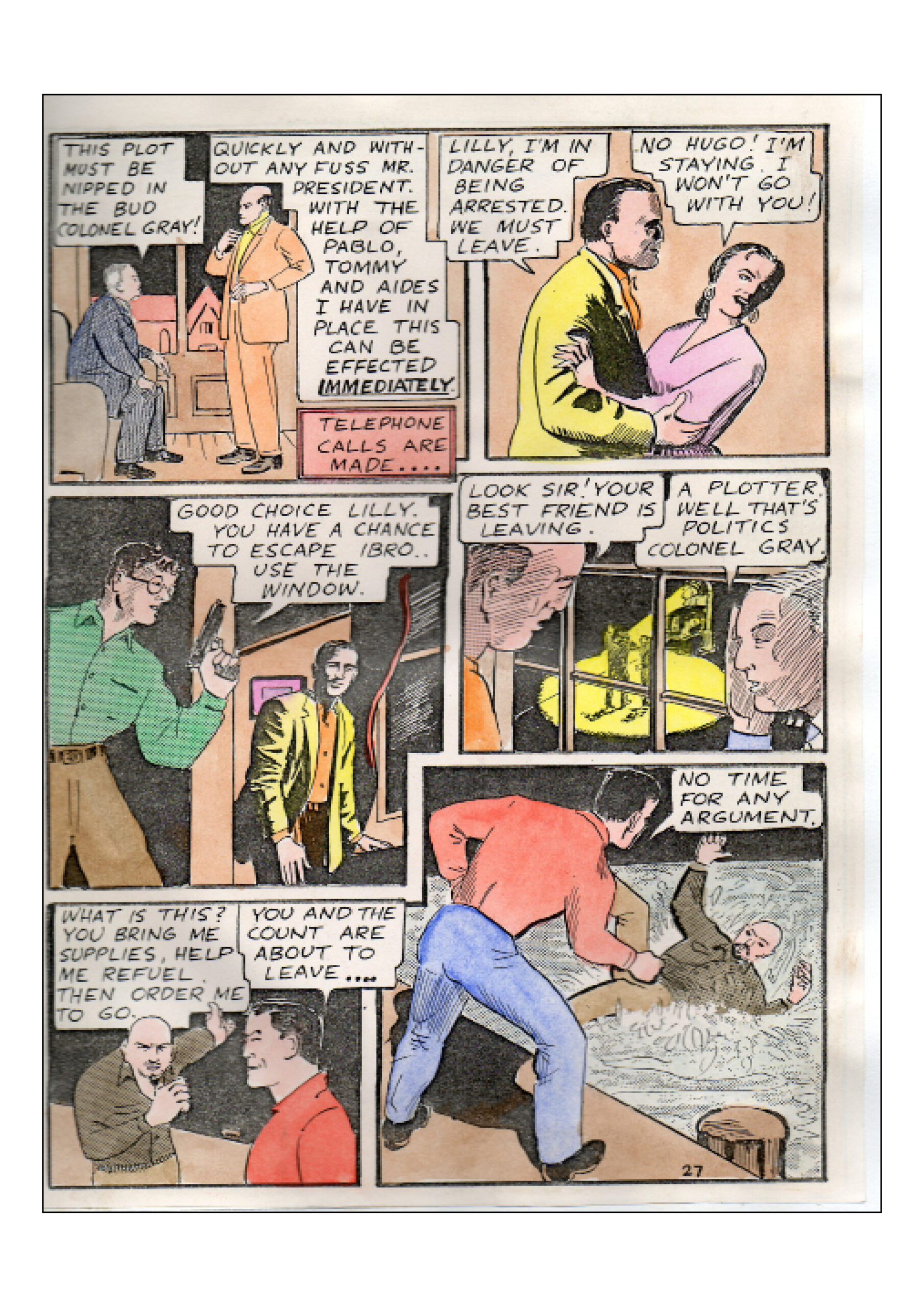
TYPHOON TOMMY: THE CHACO WAR
Original price was: $24.99.$0.00Current price is: $0.00.
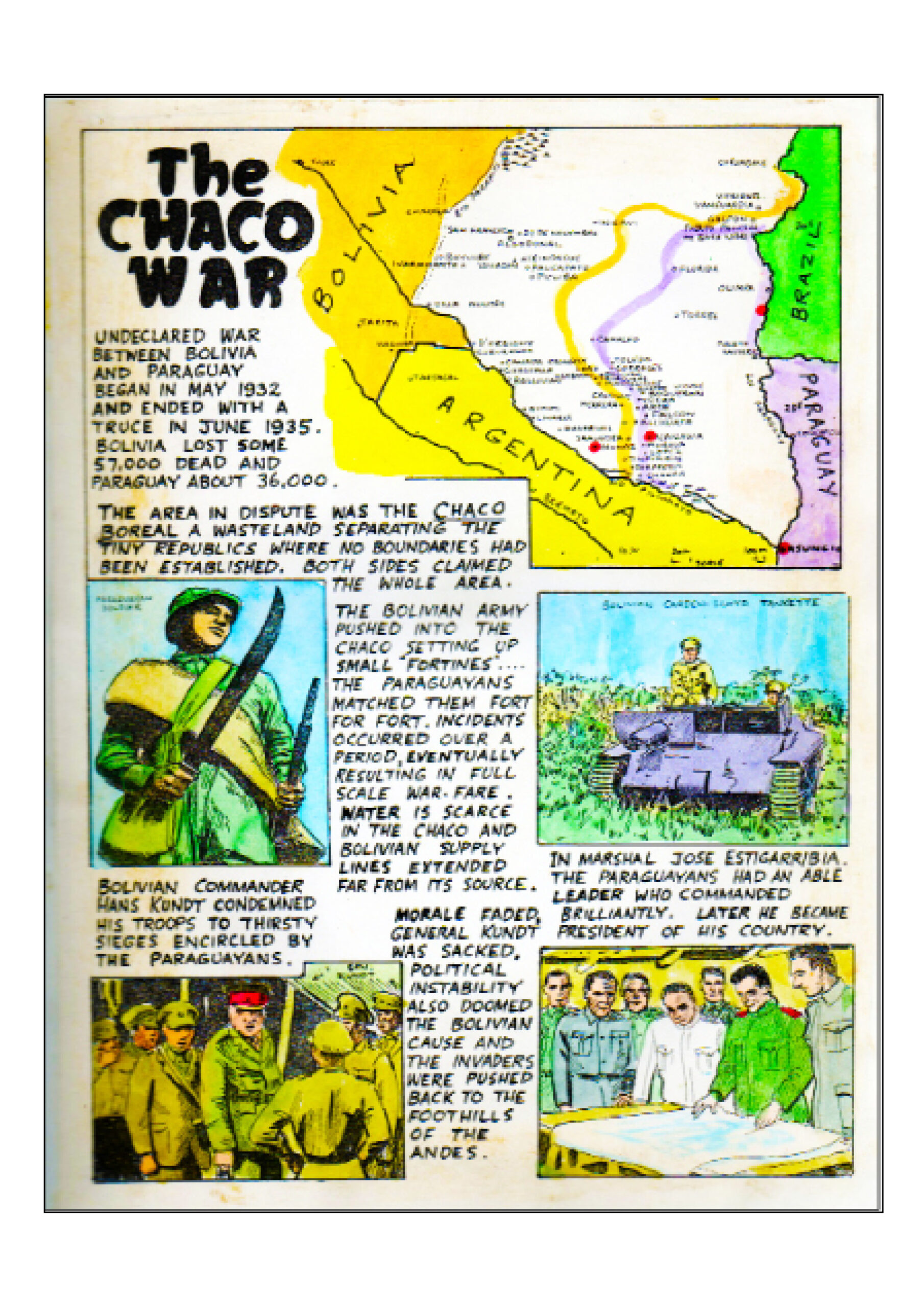
Full colour, hand-drawn graphic novel of an Australian pilot’s involvement in one of South America’s least known but most lethal conflicts. An unpublished manuscript rescued from a deceased estate and originally brought to print in black and white by the fine folks at the Adelaide Comics Centre in South Australia.
Description
Description
Typhoon Tommy: The Chaco War
Original, locally conceived and created graphic novels are now a well-established part of Australia’s wider comicbook culture, analysis and publication information thereof disseminated via a regular podcast hosted by the Australian Library & Information Association [ALIA}. According to Patrick (2012), “The critical acclaim enjoyed by such recent Australian graphic novels as Shaun Tan’s The Arrival (2006) and Nicki Greenberg’s adaptation of The Great Gatsby (2007) suggested that Australia had finally ‘caught up’ with the United States and Britain, by embracing the graphic novel as a legitimate creative medium, on a par with literature and cinema”. Hence, “the study of the graphic novel in an exclusively Australian context provides a new perspective for re-examining the origins, definitions and, indeed, the limitations of the term ‘graphic novel’, and extends the parameters of the academic literature devoted to the medium beyond the traditionally dominant Anglo-American focus”. Contemporaneously, in addition to ALIA’s regular podcast, annual lists of the best Australian graphic novels see publication across a plethora of arts hubs. However, recognition of Australian graphic novels was not always so forthcoming as now, and noteworthy works prior to its resurgent popularization were lost in transition, specifically Typhoon Tommy: The Chaco War.
Indeed: while it is the graphic novel resurgence of the 1990s and beyond which began to galvanize critics, the impetus to this new perspective began in the 1970s and 1980s, with new specialty comic shops opening in Australia, and corresponding attempts by avid readers and incipient creators to elevate the discourse surrounding the medium from the juvenilia with which it had traditionally been associated to the realm of art. So too, as commercial comics publishers ceased operation, smaller, independent publishers entered the scene. With a DIY approach to comics, creators began pushing previously held boundaries in increasingly provocative and controversial works challenging the conventional view that comics were a juvenile medium. Indeed, it was a commitment to aesthetic experimentation more than any socio-political allegiances which drive this reformation of the industry. However, radical political views were imported from counter-culture, underground publications emanating from the US and UK, which correspondingly sought to politicize the medium.
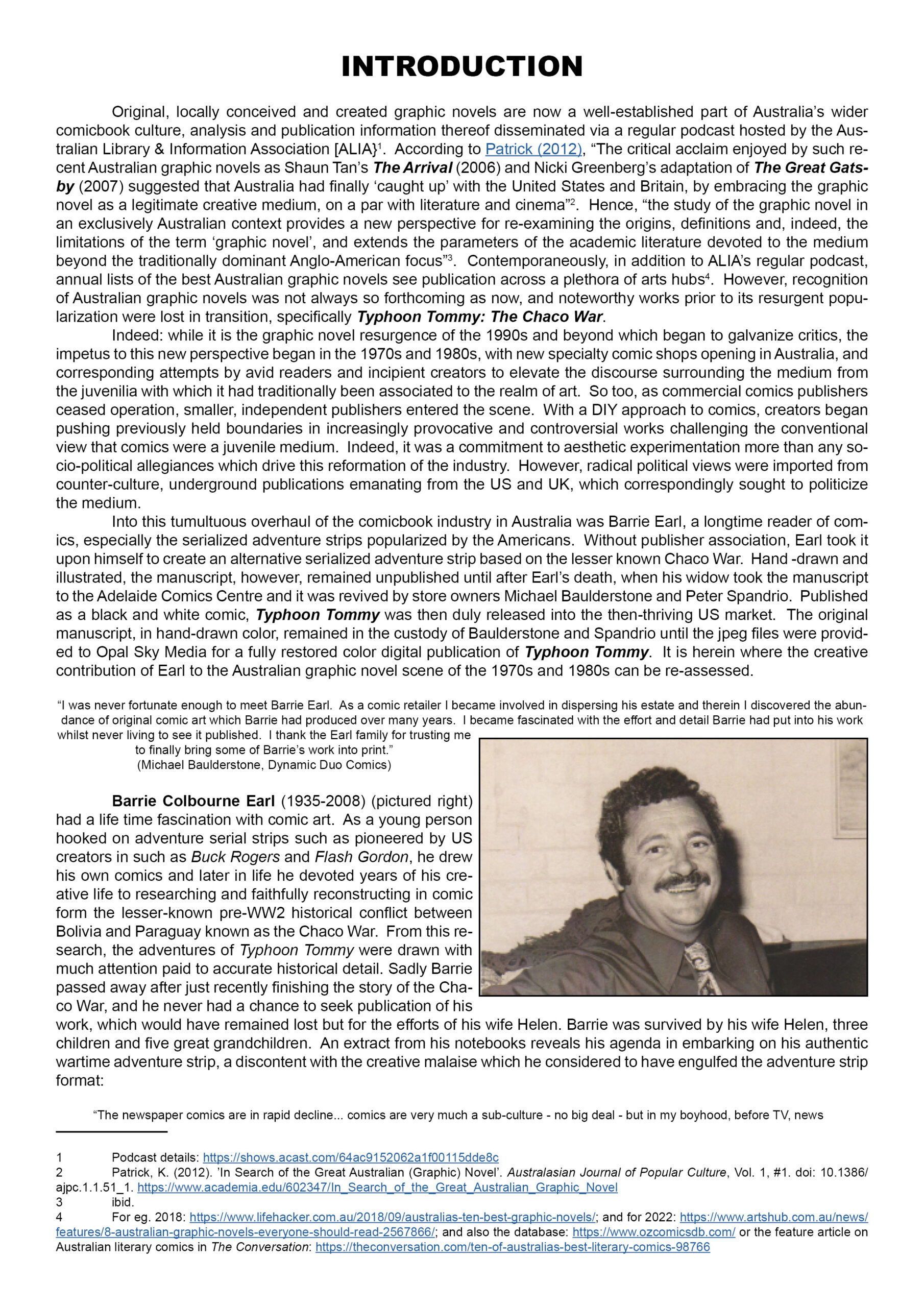
Into this tumultuous overhaul of the comicbook industry in Australia was Barrie Earl, a longtime reader of comics, especially the serialized adventure strips popularized by the Americans. Without publisher association, Earl took it upon himself to create an alternative serialized adventure strip based on the lesser known Chaco War. Hand -drawn and illustrated, the manuscript, however, remained unpublished until after Earl’s death, when his widow took the manuscript to the Adelaide Comics Centre and it was revived by store owners Michael Baulderstone and Peter Spandrio. Published as a black and white comic, Typhoon Tommy was then duly released into the then-thriving US market. The original manuscript, in hand-drawn color, remained in the custody of Baulderstone and Spandrio until the jpeg files were provided to Opal Sky Media for a fully restored color digital publication of Typhoon Tommy. It is herein where the creative contribution of Earl to the Australian graphic novel scene of the 1970s and 1980s can be re-assessed.


